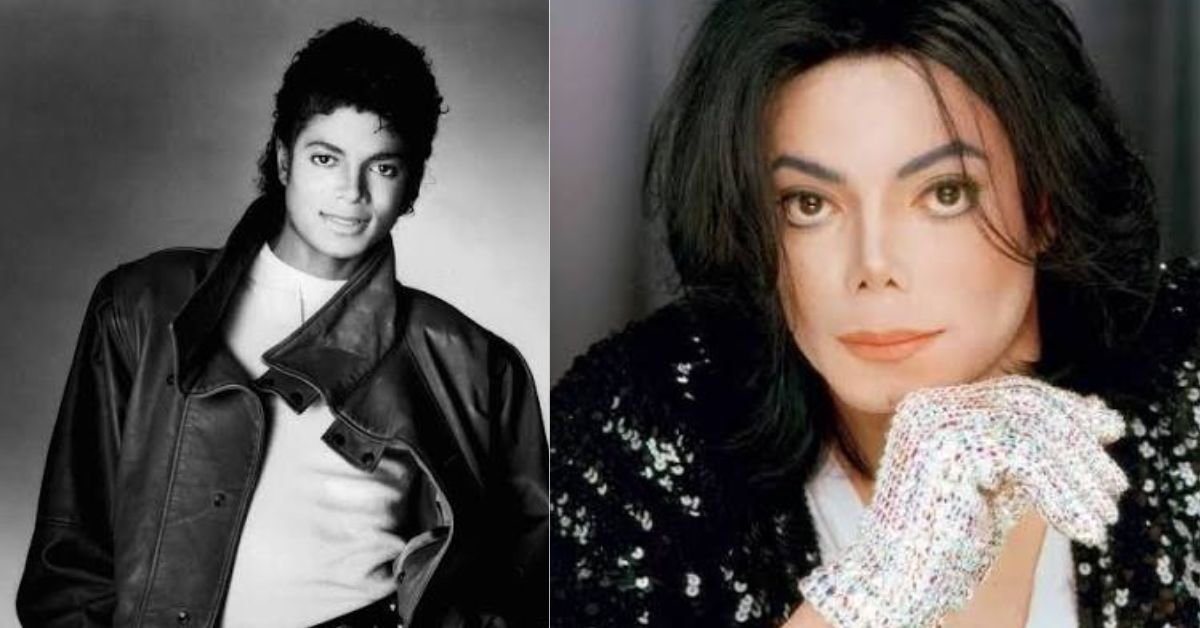
Quick Answer: Michael Jackson (August 29, 1958 – June 25, 2009) was an American singer, songwriter, and entertainer widely regarded as the King of Pop. He rose to fame as a child performer with the Jackson 5 before launching one of the most successful solo careers in music history. His album Thriller remains the best-selling album of all time. Jackson died at age 50 from acute propofol intoxication.
Quick Facts Table
| Full Name | Michael Joseph Jackson |
| Date of Birth | August 29, 1958 |
| Birthplace | Gary, Indiana, USA |
| Nationality | American |
| Occupation | Singer, Songwriter, Dancer, Entertainer |
| Known For | “Thriller,” moonwalk, King of Pop |
| Height | 5’9″ (175 cm) |
| Spouse | Lisa Marie Presley (1994–1996); Debbie Rowe (1996–1999) |
| Children | Michael Joseph Jackson Jr. (“Prince”), Paris-Michael Katherine Jackson, Prince Michael II (“Blanket,” now Bigi) |
| Estimated Net Worth at Death | ~$500 million (estate has since earned over $2 billion) |
| Current Status | Deceased (June 25, 2009) |
Few names carry the weight that Michael Jackson’s does. Across six decades—from a cramped house in Gary, Indiana, to sold-out stadiums on every continent—Jackson reshaped what popular music could be, what a performer could do, and how deeply a single artist could mark the culture. He was not simply famous. He was, by most measures, the most famous person on the planet for a significant stretch of the 20th century.
Related Stories



His story is extraordinary in almost every dimension: the stratospheric talent, the genre-defining records, the visual innovation, the humanitarian work, and the deeply painful controversies that shadowed his later years. Understanding Michael Jackson means holding all of it together—the brilliance and the tragedy, the joy and the sorrow.
This biography covers his full life chronologically: his childhood in Gary, his years with the Jackson 5, his unmatched solo career, his personal struggles, his death in 2009, and the legacy that continues to generate debate and admiration in equal measure.
Early Life: Growing Up in Gary, Indiana
Michael Joseph Jackson was born on August 29, 1958, in Gary, Indiana, the eighth of ten children born to Joseph Walter Jackson and Katherine Esther Scruse. The family lived in a modest two-bedroom house on 2300 Jackson Street—a detail that takes on an almost mythological quality given what followed.
Gary was a working-class steel town, and Joseph Jackson was a steel mill worker with a steel mill temperament. By most accounts—including those of his children—he was an exacting, at times physically brutal disciplinarian who recognized early that his sons had musical gifts worth developing. Katherine, a Jehovah’s Witness, provided the spiritual and emotional warmth that Joseph did not.
Michael showed extraordinary ability almost from the moment he could stand. He was singing at age three, dancing by four, and performing publicly by five. According to Jackson’s own memoir Moonwalk (1988), he began absorbing the performances of performers like James Brown and Jackie Wilson instinctively, mimicking their footwork and stage presence without formal instruction.
Joseph Jackson formed the Jackson Brothers band in 1964, which would eventually become the Jackson 5. Michael, despite being years younger than his siblings Jackie, Tito, Jermaine, and Marlon, quickly became its focal point. His voice—clear, emotionally intuitive, astonishing for his age—was impossible to overlook.
The Jackson 5: A Childhood in the Spotlight
The Jackson 5 performed locally throughout Indiana and the Midwest before catching a break that would change everything. In 1969, Motown Records signed the group after founder Berry Gordy saw them perform. They relocated to Los Angeles, and the machine of American pop culture took over.
Their Motown debut single, “I Want You Back,” released in October 1969, reached number one on the Billboard Hot 100. It was followed in rapid succession by “ABC,” “The Love You Save,” and “I’ll Be There”—all chart-topping singles released within a single year. The speed of that success was staggering. The Jackson 5 became a cultural phenomenon: they had a Saturday morning cartoon series, merchandise, and a fan base that rivaled the Beatles in its intensity.
Michael was eleven years old.
The pressures that came with that level of fame at that age were significant. In interviews given decades later, Jackson described feeling isolated, robbed of a normal childhood, and subjected to a performing schedule that left little room for anything resembling ordinary youth. He spoke candidly about his father’s harsh methods of discipline—descriptions that Joseph Jackson disputed—and about the emotional toll of being perceived as a product rather than a child.
The group left Motown for Epic Records in 1975. Jermaine, who was married to Berry Gordy’s daughter, stayed behind. Randy Jackson joined the group, which was briefly rebranded as the Jacksons. They continued recording and touring, but the Jackson 5 era—in terms of its cultural dominance—was drawing to a close.
Going Solo: “Off the Wall” and the First Signs of What Was Coming
Michael Jackson had been releasing solo material on Motown since 1972, producing modest hits. The real breakthrough came after he starred in The Wiz (1978), a film adaptation of The Wizard of Oz with an all-Black cast, directed by Sidney Lumet. On set, he met Quincy Jones, one of the most decorated producers in American music history.
Their collaboration produced Off the Wall in 1979. The album was a genuine artistic statement—sophisticated, danceable, warm, and anchored by Jackson’s increasingly mature vocal performances. It became the first solo album by a Black artist to generate four Top 10 singles on the Billboard Hot 100. The Recording Industry Association of America (RIAA) certified it at 8x Platinum in the United States.
Critics noticed. But even the most enthusiastic reviews didn’t fully anticipate what was coming next.
“Thriller”: The Album That Changed Everything
Released on November 30, 1982, Thriller is the best-selling album in recorded history. According to the RIAA, it has sold more than 34 million copies in the United States alone; global estimates range between 66 and 70 million copies. Seven of its nine tracks were released as singles. All seven reached the Top 10.
The album didn’t just sell well—it transformed the music industry’s relationship with the music video. The 14-minute short film for the title track, directed by John Landis and debuted on MTV in December 1983, was a production unlike anything seen before: a horror-themed cinematic event with choreography, storytelling, and production values that belong in a different category from what “music video” had previously meant. The Thriller short film is listed in the Guinness World Records as the most successful music video of all time.
Jackson’s performance on Motown 25 in May 1983, during which he debuted the moonwalk to a national television audience, is one of the most replayed moments in entertainment history. The Motown 25: Yesterday, Today and Forever special drew an estimated 47 million viewers, and Jackson’s performance of “Billie Jean” is widely cited by critics and fellow artists as a defining cultural moment.
Thriller won eight Grammy Awards in 1984—a record at the time. Jackson was 25 years old.
“Bad,” “Dangerous,” and a Career at Its Commercial Peak
If Thriller had set an impossibly high bar, Bad (1987) came remarkably close to clearing it. Produced again with Quincy Jones, the album generated five consecutive number-one singles on the Billboard Hot 100—a record that still stands. The Bad World Tour ran from September 1987 to January 1989, drawing approximately 4.4 million people across 123 concerts. It was, at the time, the highest-grossing concert tour in history.
Dangerous followed in 1991, this time produced primarily with Teddy Riley and Bill Bottrell. It debuted at number one in 25 countries and has been certified 7x Platinum by the RIAA. The album reflected Jackson’s ongoing evolution as a lyricist—more socially conscious, more complex—while the accompanying short films, including Black or White and Remember the Time, continued to set production standards.
By this point, Jackson had signed what was reported to be the largest recording contract in history with Sony Music, worth a reported $890 million over several albums.
Neverland, Personal Life, and the Weight of Fame
Jackson purchased a 2,700-acre estate in Santa Ynez Valley, California, in 1988. He named it Neverland Ranch. The property included a private amusement park, a zoo, a movie theater, and living quarters that reflected his well-documented love of childhood fantasy and whimsy. For years, Neverland served as a retreat and, controversially, a place where Jackson hosted children—many of them ill or underprivileged—for visits he described as acts of charitable goodwill.
His personal life attracted relentless scrutiny. His appearance changed significantly over the years—changes Jackson attributed primarily to vitiligo, a skin condition that causes depigmentation, and to rhinoplasty surgeries. He confirmed the skin condition publicly in a 1993 interview with Oprah Winfrey, which drew approximately 90 million viewers and remains one of the most-watched interview broadcasts in American television history.
Jackson married Lisa Marie Presley, the daughter of Elvis Presley, in May 1994. The marriage was brief, ending in divorce in 1996. He married Debbie Rowe later that same year; they divorced in 1999. Jackson had three children: Michael Joseph Jackson Jr. (known as Prince), Paris-Michael Katherine Jackson, and Prince Michael II (now known as Bigi, previously referred to as Blanket).
The 1993 and 2003 Allegations: Separating Fact from Allegation
No account of Michael Jackson’s life can responsibly omit the criminal allegations made against him, nor can it treat unproven accusations as established fact.
1993: Jordan Chandler, then 13 years old, accused Jackson of sexual abuse. Jackson denied the allegations. The Los Angeles District Attorney’s office investigated but did not file criminal charges, citing insufficient evidence. Jackson reached a civil settlement with the Chandler family for a reported $23 million in January 1994. The settlement explicitly stated it was not an admission of wrongdoing. Jackson maintained his innocence for the remainder of his life.
2003: A documentary filmed by British journalist Martin Bashir, Living with Michael Jackson, prompted renewed public scrutiny. Jackson was arrested in November 2003 and charged with seven counts of child molestation and two counts of administering an intoxicating agent relating to allegations made by Gavin Arvizo, then 13. After a four-month trial in Santa Barbara County, Jackson was acquitted on all 14 counts on June 13, 2005. He was found not guilty by a jury of his peers on every charge.
Posthumous allegations: The 2019 HBO documentary Leaving Neverland featured Wade Robson and James Safechuck, who alleged abuse. Both men had previously testified or declared under oath that Jackson had not abused them. The Jackson estate has strongly disputed these accounts and filed lawsuits against HBO and the documentary’s producers. These allegations remain contested; no criminal charges were ever brought, and no court has made findings of fact.
Readers and audiences are encouraged to review primary sources and legal records rather than relying solely on media coverage.
Career and Event Timeline
| Year | Milestone |
|---|---|
| 1958 | Born in Gary, Indiana |
| 1964 | Joins the Jackson Brothers (later Jackson 5) |
| 1969 | Jackson 5 signs with Motown; “I Want You Back” hits #1 |
| 1971 | Releases first solo album, Got to Be There, on Motown |
| 1978 | Stars in The Wiz; meets Quincy Jones |
| 1979 | Off the Wall released; four Top 10 singles |
| 1982 | Thriller released |
| 1983 | Debuts moonwalk on Motown 25; Thriller video premieres |
| 1984 | Wins 8 Grammy Awards; endorsement deal with Pepsi |
| 1987 | Bad released; Bad World Tour begins |
| 1988 | Purchases Neverland Ranch |
| 1991 | Dangerous released |
| 1993 | Appears on Oprah; civil allegations by Jordan Chandler |
| 1994 | Marries Lisa Marie Presley; civil settlement reached |
| 1995 | HIStory: Past, Present and Future, Book I released |
| 2001 | Invincible released |
| 2003 | Living with Michael Jackson airs; arrested on abuse charges |
| 2005 | Acquitted on all counts |
| 2009 | Dies on June 25 from acute propofol intoxication |
| 2012 | Inducted posthumously into the Rock and Roll Hall of Fame as a solo artist |
The Final Chapter: “This Is It” and the Last Days
Following years of reduced public activity, Jackson announced in March 2009 that he would perform a series of 50 comeback concerts at The O2 Arena in London, titled This Is It. The announcement generated extraordinary demand: tickets reportedly sold out within hours, with roughly one million people purchasing them.
Rehearsals were already underway in Los Angeles when Jackson died on June 25, 2009, at his rented Holmby Hills estate. He was 50 years old.
The Los Angeles County Coroner ruled the cause of death as acute propofol and benzodiazepine intoxication. Dr. Conrad Murray, Jackson’s personal physician, was convicted of involuntary manslaughter in November 2011 and sentenced to four years in county jail. He served approximately two years before being released.
Jackson’s public memorial service at the Staples Center in Los Angeles on July 7, 2009, was watched by an estimated 31.1 million viewers in the United States alone. According to the Associated Press, approximately one billion people worldwide watched some portion of the memorial.
What Is Michael Jackson’s Lasting Legacy?
The numbers attached to Michael Jackson’s career remain staggering years after his death. The Thriller album still sells. The moonwalk is still imitated. His influence appears in artists as disparate as Beyoncé, Justin Timberlake, Bruno Mars, and The Weeknd—all of whom have explicitly cited Jackson as a primary influence.
Beyond the statistics, Jackson’s legacy is a cultural one. He helped break racial barriers on MTV at a time when the channel rarely played Black artists. His humanitarian work—he supported 39 charities throughout his life, according to the Guinness World Records—is frequently overlooked in favor of controversy. He donated proceeds from the Bad World Tour to charity. He wrote “We Are the World” alongside Lionel Richie, which raised over $63 million for African famine relief.
His estate has continued to grow since his death. Forbes reported that the Michael Jackson estate earned over $2 billion in the decade following his passing—making him the highest-earning deceased celebrity multiple years running.
The debate over his personal conduct is unlikely to be fully resolved. Courts acquitted him; documentaries have challenged that verdict in the court of public opinion. What remains unambiguous is the scale of his artistic achievement and his transformation of popular culture.
Frequently Asked Questions
When and where was Michael Jackson born?
Michael Jackson was born on August 29, 1958, in Gary, Indiana. He was the eighth of ten children in the Jackson family.
What is Michael Jackson’s best-selling album?
Thriller, released in 1982, is Michael Jackson’s best-selling album and the best-selling album of all time, with an estimated 66–70 million copies sold worldwide, according to the RIAA and Sony Music.
How did Michael Jackson die?
Michael Jackson died on June 25, 2009, from acute propofol and benzodiazepine intoxication. His personal physician, Dr. Conrad Murray, was convicted of involuntary manslaughter in 2011.
Was Michael Jackson convicted of any crimes?
No. Michael Jackson was acquitted on all 14 counts in his 2005 criminal trial in Santa Barbara County, including all charges related to child molestation. He was never convicted of any crime.
Who are Michael Jackson’s children?
Michael Jackson had three children: Michael Joseph Jackson Jr. (Prince), Paris-Michael Katherine Jackson, and Bigi Jackson (formerly known as Blanket, now Bigi).
How much is the Michael Jackson estate worth?
At the time of his death, Jackson’s estate was valued at approximately $500 million. In the years since, Forbes has reported that the estate has generated over $2 billion in posthumous earnings, making it one of the most valuable celebrity estates in history.

Emma Clarke is a content writer at Gaukurinn.is, specializing in celebrity news, pop culture, movies, and music. With a strong focus on accuracy and trending topics, she creates engaging and well-researched articles that keep readers informed and entertained.
Emma follows trusted sources and editorial standards to ensure content is reliable, relevant, and up to date. Her goal is to deliver clear, valuable information that readers can trust.