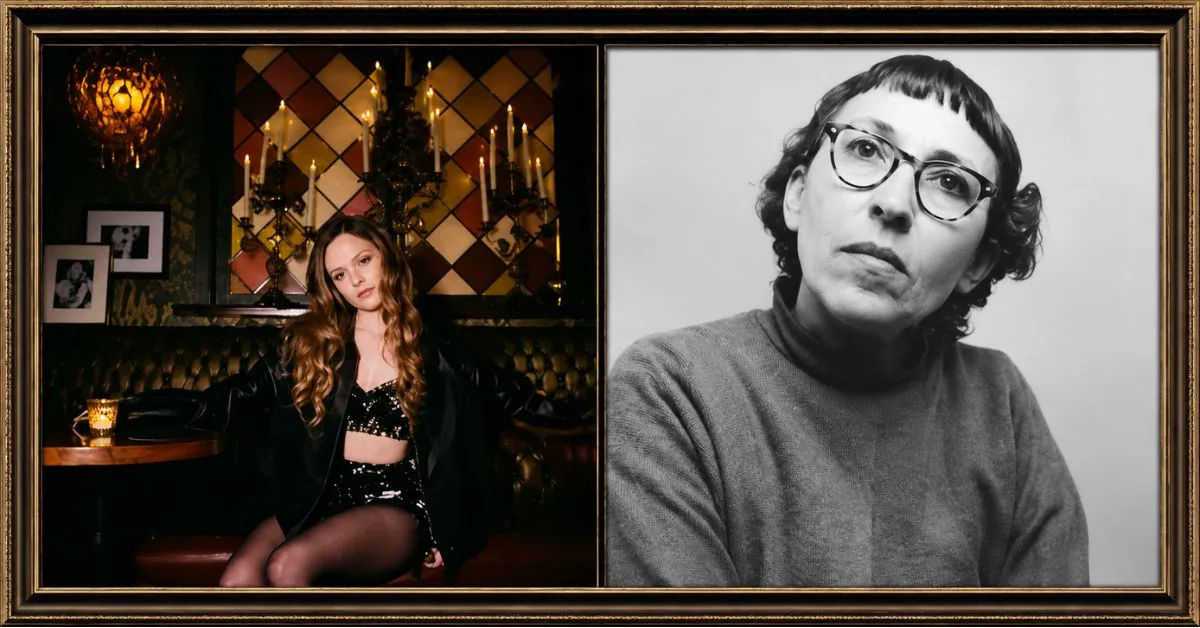
Quick answer: Yes—sort of. Ed Gein’s only documented romantic connection was with a Plainfield woman named Adeline Watkins, who claimed in 1957 that the two shared a 20-year courtship and that he proposed to her. Within weeks, she retracted most of her story, calling it exaggerated and insisting they were only friends.
The question feels almost impossible to ask with a straight face. Ed Gein—the “Butcher of Plainfield,” the man whose farmhouse became a catalog of human horrors—dating someone? Sharing milkshakes? Talking about books? And yet that’s exactly the picture one woman painted in the chaotic days after his 1957 arrest.
What makes the answer so fascinating isn’t just that Gein may have had a girlfriend. It’s how quickly that romance unraveled, how the woman at its center changed her story, and how Netflix’s Monster: The Ed Gein Story has dragged this strange footnote back into the spotlight nearly 70 years later. Below, we’ll dig into the real relationship, the woman who claimed to love him, and the broader life of a man whose crimes reshaped American horror.
Related Stories



Biography Snapshot
| Detail | Information |
|---|---|
| Full Name | Edward Theodore Gein |
| Known As | The Butcher of Plainfield |
| Date of Birth | August 27, 1906 |
| Date of Death | July 26, 1984 (aged 77) |
| Birthplace | La Crosse, Wisconsin, USA |
| Nationality | American |
| Profession | Farmer and handyman |
| Years Active (crimes) | c. 1947–1957 |
| Known For | Grave robbing, two confessed murders, inspiring iconic horror films |
| Relationship Status | Never married; alleged courtship with Adeline Watkins |
| Children | None |
| Education | Local schooling in Plainfield, Wisconsin |
| Net Worth | Negligible; lived as a poor rural laborer |
| Social Media | None (died 1984); large posthumous true-crime following |
Early Life and Background: How Augusta Gein Shaped Her Son
Edward Theodore Gein was born on August 27, 1906, in La Crosse, Wisconsin, the second son of George and Augusta Gein. To understand the man, you have to understand the household—because almost every account of Gein’s life circles back to his mother.
George Gein was an alcoholic who, according to forensic psychiatrist Carole Lieberman speaking to A&E Crime + Investigation, “pawned off parenting duties” to his wife. Augusta, a fiercely devout Christian, ran the home with an iron grip. She raised Ed and his older brother, Henry, on an isolated farm in Plainfield and preached a grim gospel: that alcohol was sinful, that women were instruments of immorality, and that the outside world was something to fear.
The boys were kept apart from other children outside of school. They worked the farm, listened to scripture, and absorbed their mother’s worldview almost entirely unfiltered. That isolation, experts argue, planted the seeds of a profound and unhealthy dependence—one that would define Ed’s entire adult life.
Death came for the family in quick succession. George died in 1940. Henry died in 1944 during a marsh fire, his body bearing bruises that some have long found suspicious. Then, in 1945, Augusta passed away after a series of strokes. For the first time, Ed Gein was completely alone on the farm—and, by his own later account, something inside him began to shift.
The Breakthrough Moment: November 16, 1957
For most public figures, the defining moment is a triumph. For Ed Gein, it was a discovery so grotesque it changed American crime history.
On November 16, 1957, Bernice Worden, the 58-year-old owner of a Plainfield hardware store, went missing. Gein was the last known person at her store, and investigators followed the trail to his property. Inside a shed, they found Worden’s headless, gutted body. Inside the house, they found a nightmare.
Authorities cataloged skulls mounted on bedposts, chairs upholstered with human skin, a belt fashioned from nipples, masks made from women’s faces, and a shoebox of preserved body parts. Gein eventually confessed to two murders—Worden and tavern owner Mary Hogan, killed in 1954—and admitted he had exhumed roughly nine female corpses from local cemeteries.
His stated motive remains one of the most chilling in criminal history. Gein said he wanted to create a “woman suit” so he could, in effect, become his late mother. As Lieberman put it, “He wanted to crawl into her skin.”

Career Evolution: From Quiet Handyman to American Boogeyman
Calling it a “career” feels almost absurd, yet Gein’s path followed a dark trajectory worth tracing. By day, he was an unremarkable rural fixture—a quiet, polite handyman who took odd jobs, babysat for neighbors, and faded into the background of small-town Wisconsin life.
That ordinariness is precisely what unnerves people. Gein’s transformation didn’t happen overnight. His grave robbing reportedly began in the late 1940s, in the years after Augusta’s death, and escalated over nearly a decade before his arrest. Neighbors saw a harmless oddball; behind closed doors, a far darker story was unfolding.
After his arrest, Gein was diagnosed with schizophrenia and declared mentally unfit to stand trial. He was committed to a Wisconsin state hospital. In 1968, deemed competent, he finally faced a court—and was found guilty of Worden’s murder but legally insane. He spent the rest of his life institutionalized.
Most Iconic Crimes and Cultural Legacy
Ed Gein’s true “legacy” is the horror genre he helped create. Though he confessed to only two killings, his case became the raw material for some of cinema’s most enduring monsters.
Here are the most significant works tied to his story:
- Psycho (1960): Robert Bloch’s novel, adapted by Alfred Hitchcock, gave us Norman Bates. Eerily, Bloch was writing the book just 35 miles from Gein’s farm when the crimes surfaced.
- The Texas Chain Saw Massacre (1974): Leatherface and his human-skin masks draw directly from Gein’s grim handiwork.
- The Silence of the Lambs (1991): The character Buffalo Bill, who stitches a “woman suit,” echoes Gein’s confessed obsession. The film won the Academy Award for Best Picture.
- Deranged (1974): Often cited as the most faithful screen depiction of Gein’s actual life.
- Monster: The Ed Gein Story (2025): Ryan Murphy’s Netflix anthology, starring Charlie Hunnam as Gein.
Personal Life and Public Persona: Who Was Adeline Watkins?
The most credible answer to “did Ed Gein have a girlfriend?” centers on Adeline Watkins, a Plainfield woman who claimed a long romance with him after his arrest. No other significant romantic relationship appears anywhere in the historical record.
In November 1957, just days after Gein was taken into custody, Watkins—then around 50 and living with her widowed mother—gave an interview to the Minneapolis Tribune. She described a 20-year relationship and spoke of Gein with startling tenderness, calling him “good and sweet and kind.” Her mother backed her up, describing him as a “sweet, polite man” who always had Adeline home by her 10 p.m. curfew.
The details she shared were almost painfully ordinary. They went to movies at the Plainfield Theater. They occasionally visited taverns, though Watkins said Gein barely drank: “I would almost have to drag Eddie into a tavern. He would much rather have gone to a drugstore for a milkshake.” They bonded over books—he loved stories about lions, tigers, Africa, and India—and, more unsettlingly, over true crime. “I guess we discussed every murder we ever heard about,” she recalled.
Then came the bombshell. Watkins claimed that on their final date, February 6, 1955, Gein proposed. She turned him down—not because of any flaw in him, she insisted, but because of her own insecurity. “I loved him and I still do,” she told the paper.
Why Did Adeline Watkins Retract Her Story?
Here’s where it gets complicated. About two weeks later, Watkins spoke to the Stevens Point Journal under a very different headline: “Woman Declares Gein ‘Romance’ Was Exaggerated.”
She now said the original story had been “blown up out of proportion.” Yes, she’d known Gein for around 20 years, but regular contact only began after 1954. He’d visited her intermittently for roughly seven months. They’d gone to the theater “a few times.” She denied calling him “sweet,” denied dragging him into taverns, and stated she had never set foot inside his house—the house where police found his horrors. “There was no 20-year romance,” she said, describing the bond as a friendship. Mostly, she said, she felt sorry for him.
Gein himself never publicly discussed Watkins. So the full truth of their relationship—whether it was love, friendship, or a lonely woman’s brief fascination—may be lost forever.
Hidden Facts and Lesser-Known Insights
Even people familiar with Gein’s crimes often miss these details:
- One room stayed spotless. Amid the squalor of his farmhouse, Augusta’s bedroom was kept immaculate, exactly as she’d left it. Psychology professor Louis Schlesinger of John Jay College noted the contrast vividly.
- A literary coincidence. Robert Bloch had nearly finished Psycho before Gein’s crimes made headlines, then realized how closely his villain mirrored a real man living just 35 miles away.
- The farm burned down. In 1958, before Gein’s trial, his property was destroyed by fire—widely believed to be arson, possibly to stop it becoming a macabre tourist attraction.
- A “model patient.” Reports from his decades in psychiatric care describe Gein as quiet, cooperative, and largely unremarkable.
Net Worth and Business Influence
Ed Gein had essentially no personal wealth—he lived as a struggling rural laborer. Any attempt to assign him a “net worth” misses the point entirely.
His real economic footprint is staggering and entirely posthumous. The horror franchises his case inspired—Psycho, The Texas Chain Saw Massacre, The Silence of the Lambs, and countless others—have collectively generated hundreds of millions of dollars across films, sequels, merchandise, and now prestige streaming series. A poor farmer who died in a state hospital became, indirectly, one of the most commercially influential figures in modern horror.
Fashion, Influence, and Cultural Impact
It’s grim to discuss, but Gein’s “influence” on visual culture is undeniable. The image of a killer wearing a mask of human skin—now a horror staple from Leatherface to Buffalo Bill—traces back to his confession about the “woman suit.” That single, horrifying concept has echoed through Halloween costumes, slasher iconography, and decades of screen villains.
More broadly, Gein helped birth the modern American obsession with the “ordinary monster”—the unassuming neighbor hiding unspeakable secrets. That archetype now drives an enormous slice of true crime media, from documentaries to podcasts to dramatized series.
Social Media Presence and Online Legacy
Gein died in 1984, long before the internet, so he has no accounts of his own. But his digital afterlife is enormous. True-crime communities on Reddit, YouTube deep-dives, and TikTok explainers keep his story circulating to new generations.
That fascination surged again in 2025 with the release of Monster: The Ed Gein Story, which sparked fresh debate about whether such figures deserve dramatization at all. The conversation around Adeline Watkins, in particular, gained new life as viewers asked the very question driving this article.
Frequently Asked Questions
Did Ed Gein have a girlfriend?
Ed Gein’s only documented romantic connection was with Adeline Watkins, a Plainfield woman who claimed a 20-year courtship and a rejected marriage proposal in a 1957 interview. She later retracted most of those claims, describing the relationship as a friendship. He never married and had no children.
Did Ed Gein really propose marriage?
According to Watkins’ initial Minneapolis Tribune interview, Gein proposed on February 6, 1955, and she declined. However, she walked back much of her story weeks later, so the proposal cannot be independently confirmed. Gein never publicly addressed it.
How many people did Ed Gein actually kill?
Gein confessed to two murders: Bernice Worden in 1957 and Mary Hogan in 1954. He was not a prolific serial killer in the traditional sense—most of the human remains in his home came from corpses he exhumed from local cemeteries.
What movies were inspired by Ed Gein?
Gein inspired major horror works including Psycho (Norman Bates), The Texas Chain Saw Massacre (Leatherface), and The Silence of the Lambs (Buffalo Bill), along with Deranged and the 2025 Netflix series Monster: The Ed Gein Story.
What movies were inspired by Ed Gein?
Gein inspired major horror works including Psycho (Norman Bates), The Texas Chain Saw Massacre (Leatherface), and The Silence of the Lambs (Buffalo Bill), along with Deranged and the 2025 Netflix series Monster: The Ed Gein Story.
How and when did Ed Gein die?
Ed Gein died on July 26, 1984, at age 77, from cancer and respiratory complications at the Mendota Mental Health Institute in Wisconsin, where he had been institutionalized after being found legally insane.
The Unsettling Humanity Behind the Horror
So, did Ed Gein have a girlfriend? The honest answer sits somewhere between “yes” and “not really”—a fragile, contradictory story told by one woman who loved him one week and downplayed him the next. That ambiguity is what makes it so haunting. For a brief moment, the monster of Plainfield was also a quiet man who liked milkshakes and adventure novels and someone, perhaps, who liked him back.
That tension between the ordinary and the unthinkable is exactly why Gein’s story refuses to fade. If you want to go deeper, watch Deranged for the most accurate dramatization, revisit Psycho to see where the horror genre pivoted, or stream Monster: The Ed Gein Story to judge the Watkins relationship for yourself. Just be warned—the most disturbing part isn’t the body parts. It’s how human he sometimes seems.

Emma Clarke is a content writer at Gaukurinn.is, specializing in celebrity news, pop culture, movies, and music. With a strong focus on accuracy and trending topics, she creates engaging and well-researched articles that keep readers informed and entertained.
Emma follows trusted sources and editorial standards to ensure content is reliable, relevant, and up to date. Her goal is to deliver clear, valuable information that readers can trust.