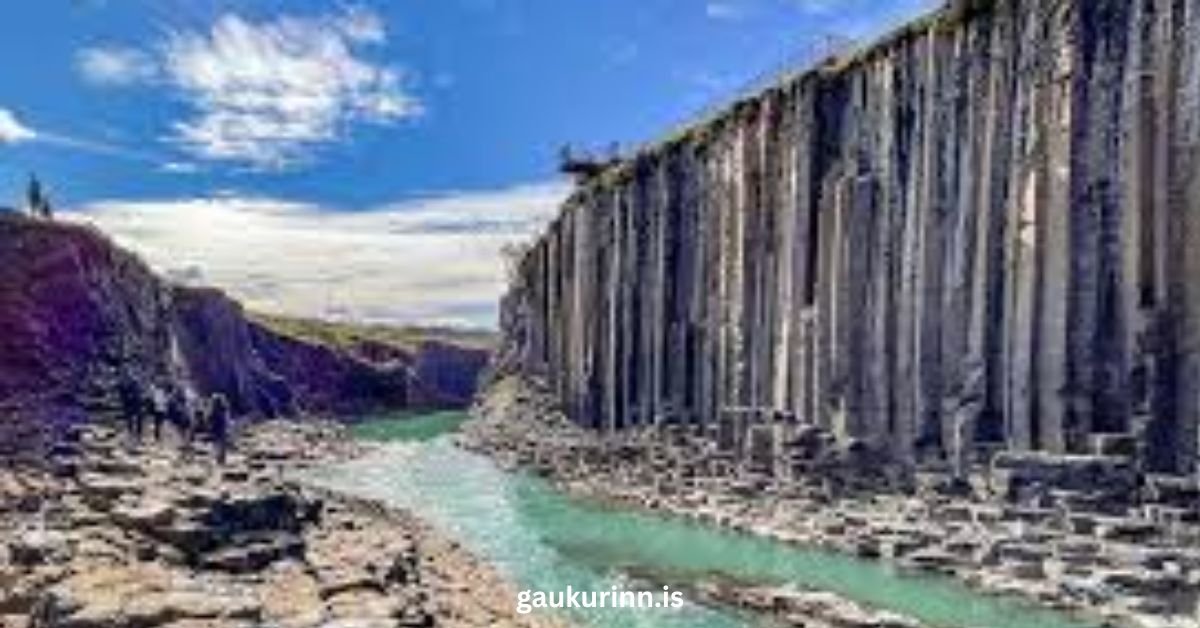
The country is the size of Kentucky, with the population of a mid-sized American suburb, yet it packs in active volcanoes, glaciers as large as small nations, waterfalls you can walk behind, a capital with better coffee than most European cities twice its size, and – in 2026 specifically – a total solar eclipse on August 12 that will darken the skies over Reykjavík, Snæfellsnes, and the Westfjords for the longest duration anywhere in Europe. The question is never what to do; it’s what to leave out.
This guide is for the person who’s already booked the flight, or is close to it. Keflavík Airport logged 2.25 million international arrivals in 2025, and if you’re adding to that figure in 2026 you’ll be arriving into the most interesting tourism year Iceland has had in a decade: a rare solar maximum driving unusually vivid Northern Lights, two brand-new geothermal lagoons opening (Reykjabað in the south, the reborn Earth Lagoon Mývatn in the north), a continuing — but localised — series of volcanic eruptions on the Reykjanes Peninsula, and a handful of attractions (more on Reynisfjara below) that are genuinely different from what last year’s blog posts described.
Ahead: where to base yourself in Reykjavík and what’s actually worth your time there, the full breakdown of the Golden Circle, South Coast, Snæfellsnes, the Ring Road, and the lesser-travelled Westfjords and Highlands, plus what’s new in 2026, what’s overrated, and a blunt FAQ at the end for the stuff nobody else answers honestly.
Related Stories

Quick-Start: How To Use This Guide
SUGGESTED CALLOUT BOX — tinted background, icon top-left
If you’ve got limited reading time, here’s the short version:
- 3–4 days in Iceland? Base in Reykjavík. Do the Golden Circle (1 day) + South Coast to Jökulsárlón (1–2 days) + a hot spring evening. Skip everything else on this page — you’ll try to cram and hate it.
- 5–7 days? Add Snæfellsnes Peninsula (1 day) or go deeper on the South Coast with an ice cave in winter. This is the sweet spot for a first trip.
- 8–12 days? The full Ring Road. This is the trip you brag about for years.
- Returning visitor? Westfjords, Highlands (Landmannalaugar, Þórsmörk), and the Eastfjords. These are what you came back for.
Everything below expands on these choices.
Things To Do in Reykjavík
Reykjavík is the world’s northernmost capital and the launchpad for almost every trip. Most visitors treat it as a bookend — one day at the start, one at the end — and that’s roughly correct. It’s a small city (population ~140,000 in the wider metro), walkable end-to-end, and the best things in it are either free or involve a public pool.
Walk Laugavegur and the Old Harbour
Start at Laugavegur, the main shopping street, which runs from the harbour end of town up toward Hallgrímskirkja. This is the one street almost every visitor walks, and yes, it’s touristy, but it’s also where the good bookshops, record stores, and bakeries sit between the puffin-souvenir shops. Sandholt Bakery is not a secret, but the cardamom buns are worth the queue.
From there, swing down to the Old Harbour (Gamla Höfnin) for whale-watching boats, the Maritime Museum, and — in my view the single most photogenic building in the city — Harpa Concert Hall, with its honeycomb glass façade that shifts colour with the weather. Free to walk inside. Go at dusk.
Hallgrímskirkja church
You cannot miss it. The 74-metre basalt-column-inspired church sits at the top of the hill and is visible from almost every point in the city centre. Pay the small fee to take the lift to the top of the tower; the 360° view of Reykjavík’s multicoloured rooftops, the bay, and Mount Esja is the photo every travel magazine uses for a reason.
Perlan
If you only do one museum in Reykjavík, make it Perlan. It’s built on hot-water storage tanks on a hill overlooking the city, and the Wonders of Iceland exhibition includes a real ice cave (walk-through), a planetarium with a Northern Lights show, and a 360° observation deck. It’s designed for people who have limited time to see Iceland’s geology up close — so treat it as a primer on day one, not a substitute for the real thing.
Swim somewhere — but not necessarily the Blue Lagoon
Public pools are Icelandic social life. Sundhöllin (downtown) and Laugardalslaug (a 20-minute walk from the centre) both have geothermal hot pots, steam, and sauna. Entry is a few thousand krónur. This is what locals actually do.
If you want the upscale version, Sky Lagoon — about a 15-minute drive from downtown in Kópavogur — has an infinity edge facing the Atlantic and a seven-step ritual that’s half spa, half small pilgrimage. It’s the closest alternative to the Blue Lagoon and, frankly, the better pick if you’re only spending one night in town.
Reykjavík at a Glance
SUGGESTED FORMAT: Table
| Thing | Time needed | Cost level | Best for |
|---|---|---|---|
| Laugavegur + Old Harbour stroll | 2–3 hours | Free | Everyone |
| Hallgrímskirkja tower | 30–45 min | $ | First-timers, photos |
| Perlan | 2–3 hours | $$ | Families, rainy days |
| Sky Lagoon | 3 hours | $$$ | Couples, unwinding |
| Public pool (Laugardalslaug) | 1–2 hours | $ | Cultural experience |
| Whale-watching boat tour | 3 hours | $$$ | Summer visitors |
Iceland’s Regions: Where To Go
Iceland is commonly split into seven regions. Not all of them are created equal for a first-time visitor, and I’ll say so plainly as we go.
The Golden Circle
The Golden Circle is the most-travelled route in Iceland and the easiest day trip from Reykjavík — a ~300 km loop that takes in three big hitters: Þingvellir, Geysir, and Gullfoss.
Þingvellir National Park is where the Eurasian and North American tectonic plates visibly pull apart, and where Iceland’s parliament (the Alþingi) first met in 930 AD. You can literally walk through the rift valley. It’s a UNESCO World Heritage site and deserves more time than most tour buses give it — budget 90 minutes minimum.
Geysir is the original geyser — the word comes from this spot. The namesake itself rarely erupts anymore, but its neighbour Strokkur goes off every 6–10 minutes, throwing water 20–30 metres into the air.
Gullfoss (“Golden Falls”) drops in two tiers into a narrow canyon. In winter, partially frozen. In summer, often rainbowed.
New detour worth adding: Kerið Crater (a 3,000-year-old red-rock volcanic crater with a startlingly blue lake inside) is a cheap 15-minute stop, and Brúarfoss — the “bluest waterfall in Iceland” — is a hike of about 7 km round trip from the trailhead for those who want fewer crowds.
The South Coast
If I had to pick one region for a first-time visitor with limited time, it would be this one. The South Coast delivers the highest density of iconic sights per kilometre anywhere in the country.
- Seljalandsfoss — 60 metres tall, and you can walk all the way behind the curtain of water. Bring waterproofs.
- Skógafoss — wider, heavier, and climbable via a staircase to the top.
- Reynisfjara Black Sand Beach — basalt columns, sea stacks, and the most-photographed shoreline in Iceland. Important 2026 update: an unprecedented erosion event in early 2026 has left the beach itself temporarily inaccessible; you can still see the rock formations and sea stacks from safe viewpoints, and the beach is expected to recover after winter. If you want to walk on black sand in the meantime, head to Vikurfjara in the nearby village of Vík or Djúpalónssandur on Snæfellsnes. And regardless — Reynisfjara’s sneaker waves kill people. Every year. Do not turn your back on the sea.
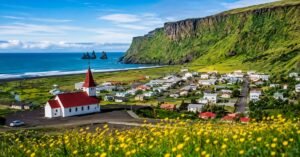
- Vík — the village itself is worth a coffee stop; the church on the hill gives you the postcard view.
- Jökulsárlón Glacier Lagoon — about 4.5 hours’ drive from Reykjavík and the single most transportive sight on the South Coast. Icebergs the size of houses drift across a lagoon that opens to the sea. Cross the road and walk onto Diamond Beach, where those same icebergs wash up on black sand like huge, melting jewels.
Snæfellsnes Peninsula (“Iceland in Miniature”)
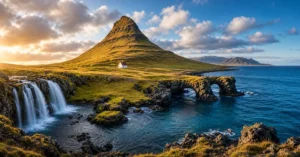
An easy day trip or overnight from Reykjavík and genuinely the best-value region in the country. In ~200 km of coastline you get glaciers, lava fields, fishing villages, black and golden beaches, seabird cliffs, and Kirkjufell — the arrowhead mountain that appeared in Game of Thrones and gets photographed from the same small waterfall by about 400 tourists an hour in summer. Go at sunrise.
North Iceland and the Diamond Circle
A step further and worth it if you’ve got a full week or more. The hub is Akureyri, a pretty harbour town often called Iceland’s second city (though with 20,000 people it’s really a decent-sized town). Base here for:
- Goðafoss — “Waterfall of the Gods”
- Lake Mývatn — geothermal weirdness (mud pots, pseudocraters, the Dimmuborgir lava formations)
- Húsavík — widely considered Iceland’s best whale-watching town; humpback sightings in summer are near-guaranteed
- Dettifoss — the most powerful waterfall in Europe by volume
2026 note: The long-beloved Mývatn Nature Baths are reopening in spring 2026 as Earth Lagoon Mývatn with expanded facilities. Its milky-blue geothermal water has a similar character to the Blue Lagoon but with a tenth of the crowds.
The Westfjords
Iceland’s most remote region. Roads are slower, services are sparser, and the reward is that you’ll go hours between other cars. Highlights: Látrabjarg cliffs (arguably Iceland’s best puffin colony, where you can lie on your stomach and photograph them from a metre away), Dynjandi waterfall (a tiered giant that looks like a wedding cake), and the hot-spring-dotted coastline around Ísafjörður. The Westfjords are also one of the prime viewing regions for the August 12, 2026 total solar eclipse, and tourism operators there are already at capacity for that week.
The Eastfjords
Similar DNA to the Westfjords — remote, slow, beautiful — with the added bonus of Iceland’s only wild reindeer population and the photogenic fishing village of Seyðisfjörður, with its rainbow-painted street leading up to the blue church. Only make the drive out here if you’re doing the full Ring Road.
The Reykjanes Peninsula
The region you land in. Keflavík Airport is here, along with the Blue Lagoon and — since 2021 — twelve volcanic eruptions. The most recent eruption (July–August 2025) has ended, and as of early 2026 there is no active eruption, though scientists consider another eruption in the area likely in the coming months. All of this is tightly monitored; the Ring Road is unaffected; flights are unaffected; tours run normally.
What this means for you as a traveller: a massive new lava field near Grindavík, still warm, still steaming in places, and accessible via guided Super Jeep tours when authorities deem it safe. It is the closest most people will ever get to walking on geology that was liquid a year ago.
The Highlands
Accessible roughly mid-June to early September (F-roads, 4×4 required, river crossings, no services). This is the lunar landscape — Landmannalaugar‘s rainbow rhyolite mountains, Þórsmörk‘s glacier-ringed valley, the bubbling geothermal springs at Kerlingarfjöll. Do not attempt this in a 2WD car, regardless of what the rental agent implied.
What To See: The Natural Phenomena
Northern Lights (Aurora Borealis)
Season: late September through early April. Conditions: dark sky, clear weather, and geomagnetic activity (the KP index).
2026 is a rare window. The sun is at or near solar maximum — the peak of its roughly 11-year activity cycle — which means stronger auroral displays and more of them. If you’ve been waiting to see the lights, this is a better year than the next three or four will be.
Practical tips from years of hunting them:
- You can sometimes see the aurora from downtown Reykjavík on a strong night, but light pollution dulls the colours. Drive 20 minutes out of town on a dark road and you’ll see 10x more.
- Download the Icelandic Met Office’s aurora forecast. It is free and the most reliable source.
- Be patient. The lights don’t follow schedules. A three-night trip in aurora season has good odds; a one-night layover has poor odds.
- Phone cameras now pick up aurora that your eyes can’t see. Open the camera, switch to night mode, point at the sky — you’ll be surprised.
The Midnight Sun
Season: roughly mid-May through late July.
North of the Arctic Circle, the sun doesn’t set. In Reykjavík (just south of the Circle) it dips briefly below the horizon around midnight in June but never gets truly dark — there’s a long, golden twilight instead. You can hike at 2 a.m. You can photograph waterfalls at 3 a.m. with no one else there. The trade-off is sleep — pack a sleep mask. Hotel blackout curtains in Iceland are serious; Airbnbs often aren’t.
The Total Solar Eclipse — August 12, 2026
SUGGESTED CALLOUT BOX — high visual priority
Iceland is one of the single best viewing locations on Earth for the August 12, 2026 total solar eclipse. The path of totality crosses the western half of the country — the Westfjords, Snæfellsnes Peninsula, and Reykjavík — with Iceland experiencing the longest totality duration of any European country.
Accommodation in the path of totality for that week has been booking up since 2024. If you’re reading this and want to go, book yesterday.
Waterfalls, Glaciers, and Ice Caves
Iceland has more than 10,000 waterfalls. You do not need to see 10,000. You need to see 5–7 good ones. The list I’d draw up for a first trip:
- Gullfoss (Golden Circle)
- Seljalandsfoss (walk behind it)
- Skógafoss (climb above it)
- Goðafoss (if you’re going north)
- Dynjandi (if you’re doing Westfjords)
- Svartifoss (in Skaftafell — basalt columns framing the fall)
- Dettifoss (if you’re doing the Diamond Circle)
Glaciers cover about 11% of Iceland. The biggest, Vatnajökull, is the largest ice cap in Europe by volume. You can hike on a glacier (guided only, always) out of Skaftafell or Sólheimajökull, and in winter you can go inside one — the blue ice caves of Vatnajökull are open November through March and are genuinely one of the most otherworldly experiences available anywhere on Earth.
Wildlife: Whales and Puffins
- Whales: April–October, best from Húsavík in the north. Humpback, minke, and if you’re lucky, blue whales.
- Puffins: Late April through August. Best colonies at Látrabjarg (Westfjords), Dyrhólaey (South Coast), and the Westman Islands (Heimaey — where a new beluga whale sanctuary also operates).
What’s New in Iceland for 2026
A quick, dated rundown of what has genuinely changed since last year’s travel blogs were written:
- Reykjabað Hot Springs — a luxury geothermal spa inspired by old Viking bathhouses, opening spring 2026 near Hveragerði on the South Coast, next to the Reykjadalur hot-spring valley.
- Earth Lagoon Mývatn — the Mývatn Nature Baths are reopening in spring 2026 under a new name and with expanded facilities.
- Laugarás Lagoon — opened summer 2025 near the Golden Circle, featuring a high-end restaurant called Ylja designed by the firm behind Sky Lagoon.
- The Volcanic Way — South Iceland’s newest designated scenic route, running past craters, lava fields, and volcanic viewpoints.
- Solar eclipse, August 12, 2026 — total eclipse visible across western Iceland.
- Solar maximum aurora season — peak 11-year-cycle conditions; expect vivid displays through spring 2026.
- Reynisfjara beach access — temporarily closed due to unusual erosion; rock formations still viewable from safe viewpoints. Expected to recover by late 2026.
Myth vs. Fact
SUGGESTED FORMAT: Two-column table or Q&A block. Optimised for featured snippets.
| Myth | Fact |
|---|---|
| “It’s too dangerous to visit Iceland during a volcanic eruption.” | Iceland’s eruptions since 2021 have been localised fissure eruptions on the Reykjanes Peninsula. None have affected air traffic, the Ring Road, or attractions elsewhere. Authorities evacuate only the immediate area. |
| “Iceland is ice. It’s freezing year-round.” | Reykjavík’s January average is around 0 °C (32 °F) — warmer than Chicago or Toronto. July averages 13 °C (55 °F). It’s the wind and rain you plan for, not the cold. |
| “You have to rent a 4×4 to drive in Iceland.” | You need 4×4 only for F-roads (Highlands) and only in summer. For the Ring Road, Golden Circle, and South Coast, a standard 2WD is fine outside of deep winter. |
| “You’ll definitely see the Northern Lights if you visit in winter.” | You won’t. You need darkness, clear skies, and geomagnetic activity all at once. A 4–5 night winter trip gives you good odds, not a guarantee. |
| “The Blue Lagoon is the best hot spring in Iceland.” | It’s the most famous. It is not the best. Sky Lagoon, Hvammsvík, the Secret Lagoon, and the new Laugarás Lagoon all offer better experiences for less money and smaller crowds. |
From Years of Guiding Travellers Here — What Most People Get Wrong
SUGGESTED FORMAT: Pull-out expertise block / author note. This is the EEAT section. Replace byline with the actual author’s credentials before publishing.
After spending enough time in and out of Iceland to lose count of the trips, the pattern of first-timer mistakes barely changes year to year. Four to flag, in order of how much they’ll wreck your trip:
1. Overestimating how much ground you can cover. Iceland looks small on the map. It is not. The Ring Road is 1,332 km. In summer, with stops, that’s a minimum of 7 days to do it properly, and closer to 10 if you actually want to breathe. Do not try to “do the whole country” in 5 days. You will spend your entire trip inside the rental car.
2. Booking the Blue Lagoon on arrival day — or worse, not booking it at all. It sells out daily in peak season, sometimes weeks in advance. If you want to go, book the slot the hour you book your flight. And book Sky Lagoon instead if your pre-flight timing doesn’t work out — it’s closer to the city and, to my taste, a more interesting experience.
3. Underestimating Icelandic weather. “I’ve been to cold places” means nothing here. The issue is the wind and the rate of change — sun, sideways rain, and snow squall can happen in a 90-minute window. Layers. Waterproofs. Not optional. If you show up in a leather jacket and Converse in April, you will be cold and wet and photographed by other tourists pointing and laughing.
4. Trying to see the Northern Lights from downtown Reykjavík. You can, on a strong night. But if you’ve flown across an ocean for this, drive the 20 minutes to Þingvellir or the Reykjanes Peninsula. It is the difference between seeing a faint grey-green smudge and seeing the sky actually move.
Comparing Iceland’s Three Big Hot Springs
SUGGESTED FORMAT: Comparison table
| Blue Lagoon | Sky Lagoon | Reykjabað (opens 2026) | |
|---|---|---|---|
| Location | Reykjanes, near airport | Kópavogur (15 min from Reykjavík) | Hveragerði (45 min from Reykjavík) |
| Best for | Pre/post-flight | City break / couples | South Coast road-trip stopover |
| Signature element | Milky-blue silica water in lava field | Infinity edge over the Atlantic | Viking bathhouse design |
| Price level | $$$$ | $$$ | $$$ (est.) |
| Crowds | Very high | High | New — TBD |
| Booking lead time | Weeks | Days | Unknown |
Frequently Asked Questions
How many days do I need in Iceland?
Five to seven days is the sweet spot for a first trip — enough to do Reykjavík, the Golden Circle, the South Coast to Jökulsárlón, and one other region (Snæfellsnes or a northern fly-in). If you want to drive the full Ring Road, budget at least 8–10 days; 7 is possible but rushed. For three-day trips, stay near Reykjavík and don’t try to do the whole country.
What is the best time of year to visit Iceland?
It depends on what you want. June–August gives you the midnight sun, full access to Highland F-roads, and the warmest weather — but also the highest prices and biggest crowds. September–October and April–May are shoulder seasons with lower prices, Northern Lights returning, and fewer people. November–March is the darkest, coldest, and the only window for ice caves and peak aurora viewing.
Is Iceland safe to visit with volcanic eruptions happening?
Yes. Iceland’s 2021–2025 eruptions have all been localised fissure eruptions on the Reykjanes Peninsula, confined to a small area near Grindavík. None have affected flights or most attractions, and the Icelandic authorities manage exclusion zones well. The country is regularly ranked among the safest destinations in the world.
Is the Blue Lagoon worth it?
It’s worth it once if you’ve never been to a geothermal spa — the water really is that blue, and the setting in a black lava field is striking. If you’ve already been, or if you’re on a budget, Sky Lagoon is cheaper and arguably better, and the public pools (Laugardalslaug, Sundhöllin) deliver the authentic Icelandic version for a fraction of the price.
Do I need to rent a car in Iceland?
If you want to see more than Reykjavík and the main tour-bus stops, yes. A rental car is the best single expense on any Iceland trip — it unlocks the side roads, the detours, and the ability to pull over for a waterfall nobody else is stopping at. A standard 2WD is fine for the Ring Road, Golden Circle, and South Coast most of the year; rent 4×4 only if you plan to drive F-roads (Highlands) in summer.
How much does a trip to Iceland cost?
Iceland is expensive — there’s no way around that. As a rough guide: a budget trip runs $200–250 USD per person per day (hostel or guesthouse, supermarket food, rental car shared), a mid-range trip $350–500 per day (mid-range hotel, one or two nice dinners, tours), and luxury comfortably exceeds $800 per day. The single best way to cut costs is to buy food from supermarkets (Bónus and Krónan are the cheap chains) and cook a meal or two a day.
Can I see the Northern Lights and the Midnight Sun on the same trip?
No. They’re opposite seasons. You need darkness for the aurora (roughly late September–early April) and the midnight sun only happens in Iceland’s summer (mid-May through late July). Pick one and plan the trip around it. If you absolutely have to have both, two trips.
Final Thoughts
Iceland in 2026 rewards the traveller who shows up willing to be surprised — by the solar eclipse in August, by the Northern Lights at solar maximum, by a black sand beach that’s literally reshaping itself this year, by the Reykjanes lava fields that were liquid a few seasons ago. The country’s headline acts — Reykjavík, the Golden Circle, the South Coast, Jökulsárlón — remain the reliable spine of any good first trip. What changes year to year is the edges: which lagoons are newest, which eruption sites are walkable, which F-roads open earliest.
The country isn’t going to run out of reasons to visit. But if you’ve been putting this trip off, 2026 is a particularly good year to stop doing that.
What to do next: Nail down your travel dates around two questions — aurora or midnight sun, and eclipse or no eclipse — then book your flights and a Blue Lagoon slot the same afternoon. Accommodation in the path of totality for the week of August 12 is the most time-sensitive piece of the whole puzzle; everything else can be built around it.

Emma Clarke is a content writer at Gaukurinn.is, specializing in celebrity news, pop culture, movies, and music. With a strong focus on accuracy and trending topics, she creates engaging and well-researched articles that keep readers informed and entertained.
Emma follows trusted sources and editorial standards to ensure content is reliable, relevant, and up to date. Her goal is to deliver clear, valuable information that readers can trust.











1 thought on “Using Things To Do in Iceland: The 2026 Insider’s Guide (Reykjavík, the Ring Road & Beyond)”