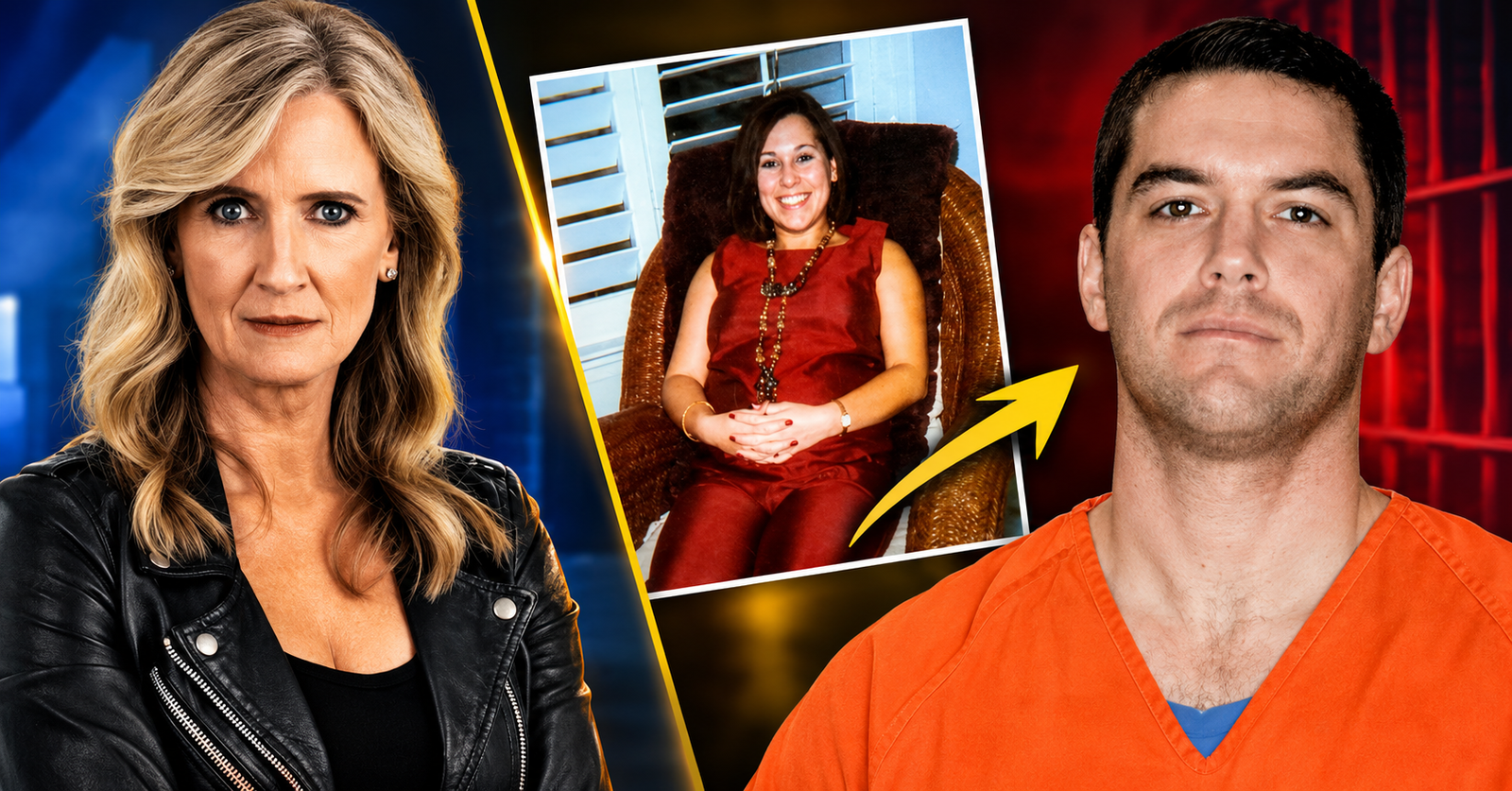
Quick answer: Scott Peterson was convicted on November 12, 2004, of the first-degree murder of his wife, Laci Peterson, and the second-degree murder of their unborn son, Conner. His death sentence was overturned in 2020, and he was resentenced to life without parole in 2021. As of 2026, his third habeas petition has been denied in its entirety.
Quick Facts
| Full Name | Scott Lee Peterson |
| Date of Birth | October 24, 1972 |
| Age | 52 |
| Birthplace | San Diego, California |
| Nationality | American |
| Occupation | Former fertilizer salesman |
| Known For | Murder of wife Laci Peterson and unborn son Conner |
| Spouse | Laci Rocha Peterson (deceased) |
| Children | Conner Peterson (deceased, unborn at time of death) |
| Current Status | Incarcerated; serving life without the possibility of parole at San Quentin State Prison |
Who Is Scott Peterson?
Scott Lee Peterson was born on October 24, 1972, in San Diego, California. Raised in a middle-class family, he was described by those who knew him as charming, athletic, and socially at ease—qualities that would later be scrutinized under the harshest possible light.
Peterson attended California Polytechnic State University in San Luis Obispo, where he studied agricultural business. It was there, in 1994, that he met Laci Rocha—a bright, warm-spirited education student from Modesto. The two began dating, and by 1997, they were married. Friends and family described the couple as happy, and by late 2002, they were expecting their first child, a boy they planned to name Conner.
Related Stories



Source: California Department of Corrections and Rehabilitation (CDCR) mugshot combined with archival news photos (AP Photo/Getty Images/CBS News).
To the outside world, Scott Peterson had what many would call a good life: a home in Modesto, a stable sales job, and a pregnant wife. What happened next shattered that image permanently.
From Modesto to the Marina: The Night Laci Disappeared
On Christmas Eve 2002, Laci Peterson—eight months pregnant—was reported missing by her husband. Scott told police he had left home that morning to go fishing alone at the Berkeley Marina, roughly 90 miles from Modesto. When he returned that afternoon, he said, Laci was gone.
The disappearance of a pretty, heavily pregnant woman on Christmas Eve captured the nation’s attention almost immediately. Volunteers flooded Modesto. Vigils were held. Laci’s family and friends pleaded publicly for her safe return.
But investigators grew skeptical of Scott Peterson early. His demeanor struck detectives as oddly detached. More troubling: the Berkeley Marina—where he claimed to have fished that day—would become the site of one of the most significant discoveries in the case.
The Affair That Changed Everything
On December 30, 2002—just six days after Laci vanished—a massage therapist named Amber Frey stepped forward. Frey told police she had been in a romantic relationship with Scott Peterson, and that he had never mentioned being married. Investigators asked her to keep the relationship going and record their phone calls.
The recordings, later played at trial, were damning. In one call made while vigils were being held for his missing wife, Peterson told Frey he was in Paris for New Year’s Eve—when he was, in fact, in Modesto attending a candlelight vigil for Laci. The brazenness of the lie stunned the public when the recordings were eventually made public.
The affair with Amber Frey didn’t prove Peterson killed his wife. But it helped establish motive, and it made a complicated case deeply personal for millions of Americans following along.
Bodies Found, Arrest, and a Nation Gripped
On April 13, 2003, the badly decomposed remains of a fetus washed ashore near Point Isabel, close to the Berkeley Marina. A day later, on April 14, a headless, limbless female torso was discovered nearby. Both were later identified as Conner and Laci Peterson.
Four days after the bodies were found, on April 18, 2003, Scott Peterson was arrested in a parking lot near a San Diego golf course. He was not a man who looked like he was waiting to hear news about his family. He had dyed his hair and beard blond, was carrying approximately $15,000 in cash, his brother’s ID, multiple cell phones, camping equipment, and—notably—his mother’s medications. Prosecutors would argue he was fleeing.
He was charged with two counts of murder: first-degree murder for the death of Laci and second-degree murder for the death of Conner.
The Trial: Key Evidence and the Verdict
Because of intense pretrial publicity in Stanislaus County, the trial was moved to Redwood City in San Mateo County. It began on June 1, 2004, and ran for six months.
The prosecution’s case was largely circumstantial. There was no confession, no eyewitness, no murder weapon found. Instead, prosecutors built their case around a web of details: the affair with Amber Frey establishing motive; the Berkeley Marina as the location where Peterson claimed to be—and where the bodies were found; the concrete anchors discovered in Peterson’s warehouse that were consistent with a homemade weight; and evidence suggesting Laci could not have been abducted after Peterson left, as the defense claimed.
The defense argued Laci was kidnapped by a third party—a theory that has continued to fuel public debate for over two decades.
On November 12, 2004, the jury returned its verdict: guilty of first-degree murder for the death of Laci, and guilty of second-degree murder for the death of Conner. Scott Peterson showed little visible emotion.
Sentencing, Appeals, and a Death Sentence Overturned
On March 16, 2005, Peterson was sentenced to death. He was transferred to San Quentin State Prison.
The case worked its way through California’s appellate system for years. Then, on August 24, 2020, the California Supreme Court issued a significant ruling in People v. Peterson, 10 Cal.5th 409. The court upheld the murder convictions but overturned the death sentence, finding that the trial judge had improperly dismissed prospective jurors who expressed reservations about capital punishment. The court ordered resentencing.
On December 8, 2021, Peterson was resentenced to life in prison without the possibility of parole.
Scott Peterson in 2026: Third Habeas Petition Denied
The most significant legal development of 2026 came on April 27, when San Mateo County Superior Court Judge Elizabeth M. Hill denied Scott Peterson’s third habeas corpus petition in its entirety. The ruling, a 116-page order, addressed 14 separate claims brought by Peterson’s defense team—including a claim of actual innocence.
Judge Hill rejected every one of them.
The petition had been filed on August 4, 2025, and represented the defense team’s most comprehensive post-conviction effort to date. The Los Angeles Innocence Project, which took up Peterson’s case in 2024, has been among the advocates pushing for a reexamination of the evidence.
Also notable: a fourth request for DNA testing was denied on April 2, 2026. A third post-conviction discovery motion was withdrawn before a scheduled May 6, 2026 hearing.
According to a press release issued by the Stanislaus County District Attorney’s Office on May 12, 2026, prosecutors maintained that the denials affirm the integrity of the original verdict.
The Unsealed Transcript That Upended the Defense
One of the more dramatic moments of 2026 came on March 25, when a 2004 in-chambers transcript was unsealed by court order. The contents of that transcript contradicted key claims being made by Peterson’s defense team—specifically regarding the so-called “Aponte tip” and a Croton watch that had featured in post-conviction arguments.
The unsealing proved consequential in another way. According to court records, Judge Hill admonished Peterson’s defense team twice for conduct approaching a violation of California Rule of Professional Conduct 3.3—the rule governing candor to the tribunal. In plain terms: the court found the defense was not being straight with the judge.
That is a serious finding, and it cast a shadow over the credibility of the defense’s broader claims.
What Remains: One Pending Matter Before the California Supreme Court
Despite the comprehensive denial of the third habeas petition, one matter remains active. A claim related to alleged bias by Juror 7 is still pending before the California Supreme Court.
That proceeding is the last active legal thread in Scott Peterson’s post-conviction efforts—at least for now. Whether the California Supreme Court takes up the juror bias claim in a meaningful way, or declines to act, will determine the next chapter of what has already become one of the longest-running true crime legal sagas in American history.
The A&E documentary Scott Peterson: The New Evidence has reignited public debate about the case in recent months, drawing millions of viewers and renewed scrutiny of the evidence. However, as of this writing, the documentary has not altered Peterson’s conviction or produced any legal breakthrough.
Laci’s Family and the Long Wait for Closure
Laci Peterson’s family—including her mother Sharon Rocha, who has been a steadfast presence throughout the legal proceedings—has consistently opposed Peterson’s post-conviction efforts. Sharon Rocha has spoken publicly about the toll the ongoing legal battles have taken, expressing frustration that her daughter’s memory continues to be drawn into courtroom disputes more than two decades after her death.
For Laci’s family, every petition filed and every news cycle reignited is another wound. Closure, in any conventional sense, has remained elusive. What they have is the 2004 verdict, upheld now through multiple layers of appellate review—and their certainty that justice, however imperfect, was served.
Chronological Case Timeline
- 1994 — Scott Peterson and Laci Rocha meet at California Polytechnic State University
- 1997 — Scott and Laci marry
- 2002 (December 24) — Laci Peterson reported missing on Christmas Eve; Scott claims to have been fishing at Berkeley Marina
- 2002 (December 30) — Amber Frey reveals affair to police; begins recording calls at investigators’ request
- 2003 (April 13–14) — Remains of Conner and Laci Peterson discovered near Berkeley Marina
- 2003 (April 18) — Scott Peterson arrested in San Diego with dyed hair, cash, and multiple cell phones
- 2004 (June 1) — Trial begins in Redwood City, San Mateo County
- 2004 (November 12) — Jury convicts Peterson of first-degree murder (Laci) and second-degree murder (Conner)
- 2005 (March 16) — Peterson sentenced to death
- 2020 (August 24) — California Supreme Court overturns death sentence (People v. Peterson, 10 Cal.5th 409); murder convictions upheld
- 2021 (December 8) — Peterson resentenced to life without the possibility of parole
- 2024 — Los Angeles Innocence Project takes up Peterson’s case
- 2025 (August 4) — Third habeas petition filed, including 14 claims and an actual innocence claim
- 2026 (March 25) — 2004 in-chambers transcript unsealed; contradicts defense claims; defense team admonished twice by Judge Hill
- 2026 (April 2) — Fourth DNA testing request denied
- 2026 (April 27) — Third habeas petition denied in its entirety by Judge Elizabeth M. Hill (116-page order)
- 2026 (May 12) — Stanislaus County District Attorney’s Office issues press release affirming denial
- 2026 (ongoing) — One matter still pending before the California Supreme Court (Juror 7 bias claim)
Frequently Asked Questions
Where is Scott Peterson now in 2026?
Scott Peterson is currently incarcerated at San Quentin State Prison in California, serving a sentence of life in prison without the possibility of parole. His most recent habeas petition was denied on April 27, 2026.
Was Scott Peterson’s death sentence overturned?
Yes. On August 24, 2020, the California Supreme Court overturned Peterson’s death sentence in People v. Peterson, 10 Cal.5th 409. The court found that the trial judge improperly dismissed jurors who had reservations about capital punishment. Peterson’s murder convictions were upheld. He was resentenced to life without parole on December 8, 2021.
What happened with Scott Peterson’s third habeas petition?
Peterson’s third habeas petition, filed August 4, 2025, raised 14 claims including actual innocence. Judge Elizabeth M. Hill denied it in its entirety on April 27, 2026, in a 116-page ruling. The court also denied a fourth DNA testing request on April 2, 2026.
Is there any new evidence in the Scott Peterson case?
The Los Angeles Innocence Project took up Peterson’s case in 2024, and the A&E documentary Scott Peterson: The New Evidence has raised questions for some viewers. However, as of 2026, no new evidence has been sufficient to alter Peterson’s conviction. A 2004 in-chambers transcript unsealed in March 2026 actually contradicted key defense claims, and the defense team was admonished twice by the presiding judge for conduct approaching a candor violation.
Who was Amber Frey in the Scott Peterson case?
Amber Frey was a Fresno massage therapist who had been in a romantic relationship with Scott Peterson at the time of Laci’s disappearance. Frey had no knowledge that Peterson was married. After coming forward to police on December 30, 2002, she cooperated with investigators by recording her phone calls with Peterson. Those recordings were played at trial and were considered among the most compelling evidence of Peterson’s deceptive behavior.
Is there still a legal proceeding active in Scott Peterson’s case?
Yes. One matter remains pending before the California Supreme Court, related to a claim of bias by Juror 7 during the original trial. All other active post-conviction proceedings have been denied or withdrawn as of May 2026.

Emma Clarke is a content writer at Gaukurinn.is, specializing in celebrity news, pop culture, movies, and music. With a strong focus on accuracy and trending topics, she creates engaging and well-researched articles that keep readers informed and entertained.
Emma follows trusted sources and editorial standards to ensure content is reliable, relevant, and up to date. Her goal is to deliver clear, valuable information that readers can trust.