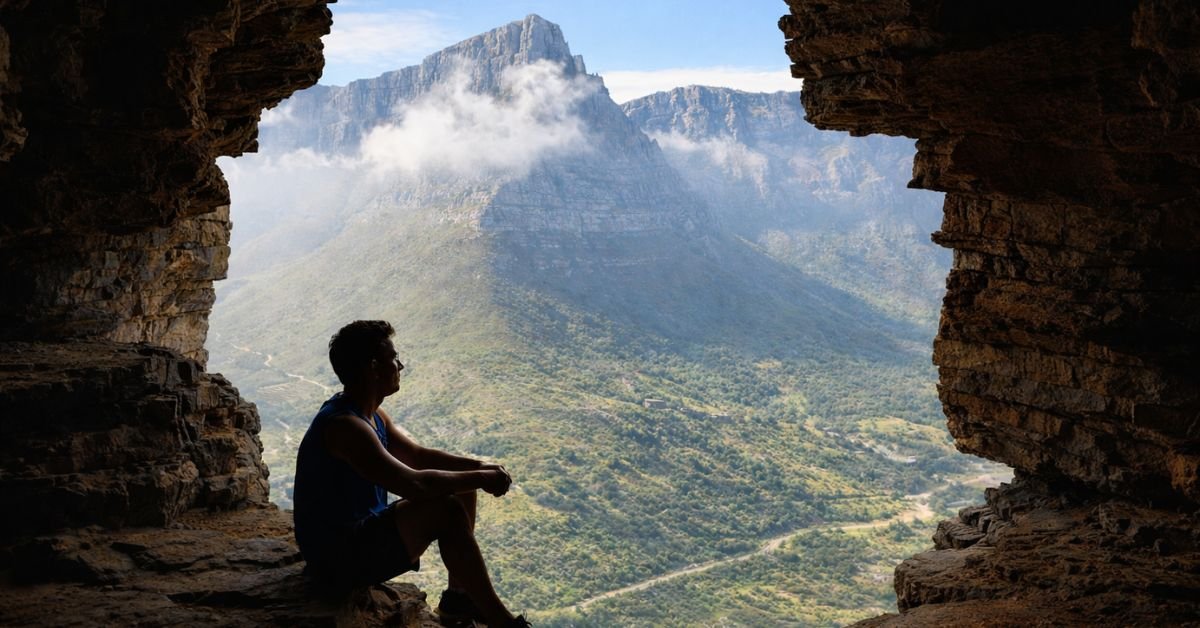
Most visitors to Iceland’s Snæfellsnes Peninsula drive right past it. There’s no ticket booth, no gift shop, no guided tour with a spiral staircase. Just a small gravel pullout off Road 574, a short uphill walk, and then you’re standing inside Sönghellir — the “Song Cave” — listening to your own voice bounce off walls that humans have been carving their names into since at least 1483.
That date matters. It’s the oldest known inscription inside an Icelandic cave, and it sits alongside the names of Eggert Ólafsson and Bjarni Pálsson, two 18th-century explorers whose government-commissioned survey of Iceland remains a landmark of European natural history. Before either of them arrived, the cave had already spent centuries in Icelandic legend as the shelter of Bárður Snæfellsás — a half-giant, half-human figure from the medieval sagas who eventually became the guardian spirit of Snæfellsjökull glacier.
So Sönghellir isn’t just a cave with good acoustics. It’s a place where geology, Viking-age folklore, Enlightenment-era science, and raw natural beauty sit in the same room. This guide covers all of it: how the cave formed, the full Bárður story, the science behind its echoes, and exactly how to get there — including what to wear, when to go, and what else to see nearby.
Where Exactly Is Sönghellir Cave?
Sönghellir sits on the northern flank of Stapafell, a prominent mountain on the south side of the Snæfellsnes Peninsula in West Iceland. The fishing village of Arnarstapi — a tiny cluster of houses perched on dramatic coastal cliffs — lies just below. Above and behind the cave looms Snæfellsjökull, the ice-capped stratovolcano that Jules Verne chose as the entry point for his 1864 novel Journey to the Center of the Earth.
GPS Coordinates: 64.7816° N, 23.6837° W
The cave is part of a cluster of smaller cavities in the same rock layer. Several of these secondary caves are visible from the main Sönghellir entrance, and they share the same geological origin — though Sönghellir is the largest and the only one with significant historical inscriptions.
How Sönghellir Formed: The Geology
This is where most travel guides go silent, and it’s a shame — because the way Sönghellir formed is genuinely different from Iceland’s famous lava tubes like Vatnshellir or Víðgelmir.
Lava tubes form when a river of molten rock crusts over on the surface while the liquid interior keeps flowing, eventually draining and leaving a hollow tunnel behind. Sönghellir didn’t form that way.
The rock surrounding Sönghellir is hyaloclastite — a type of volcanic material created when lava erupts under ice or water. When hot magma meets glacial meltwater or the sea, it shatters into angular fragments and glassy particles that cement together into a rough, porous formation called tuff. Over thousands of years, wind and water erosion carve out cavities in this relatively soft material, producing erosion caves rather than volcanic tubes.
You can see the evidence yourself. The rock inside Sönghellir is rough-textured and composed of angular, poorly sorted fragments — not the smooth, ropy surfaces you’d find inside a lava tube. The walls are layered and fractured, not sculpted by flowing magma. And the cluster of small caves surrounding Sönghellir all sit within the same stratigraphic layer, which is exactly what you’d expect from differential erosion in a hyaloclastite deposit.
If you stand at the mouth of Sönghellir and look across the small hollow in front of you, the opposite hillside is made of a visibly different material — a smoother, denser lava flow that resisted erosion far more effectively. That contrast tells the geological story at a glance.
The Acoustics: Why Sönghellir “Sings”
The cave’s Icelandic name — Sönghellir, literally “Song Cave” — comes from its remarkable echo. Visitors have been testing their voices here for centuries, and the effect is genuinely striking: even a soft hum returns amplified and layered, creating an almost choral quality.
So what’s happening? The short answer is geometry plus material.
Sönghellir’s interior is roughly concave, with a vaulted ceiling and hard, dense walls. Sound waves produced inside the cave reflect off these surfaces and converge back toward the center rather than scattering randomly. The hyaloclastite rock, despite its rough texture, is dense enough to reflect sound efficiently rather than absorbing it. And the cave’s dimensions — it’s not so large that reflections arrive with noticeable delay, and not so small that they overlap into mush — produce a reverberation time that sits in a sweet spot. Your voice comes back to you enriched, with just enough delay to be perceived as a separate event rather than simple room ambience.
The result is what acoustic engineers would call a naturally resonant chamber. Medieval Icelanders, who didn’t have that vocabulary, called it magic — and named the cave accordingly.
The Legend of Bárður Snæfellsás
No account of Sönghellir is complete without Bárður, because in Icelandic tradition, this is his cave.
Bárðar saga Snæfellsáss — a medieval text probably written in the early 14th century — tells the story of Bárður Dumbsson, who arrived on the Snæfellsnes Peninsula during the settlement period of the late 9th century. Bárður wasn’t fully human. His father, Dumbur, was half-giant and half-troll. His mother, Mjöll, was a human woman described as one of the tallest and most beautiful of her time. The saga says the Icelandic word mjöll — meaning fine, beautiful snow falling in calm weather — comes from her.
Bárður was raised in Norway by Dofri, a mountain-dwelling giant of the Dovrefjell range. He married Dofri’s daughter, had three daughters, and after her death married a human woman named Herþrúður, fathering six more daughters. Fleeing the increasingly oppressive rule of Norway’s king, he sailed to Iceland with his family, landing at Djúpalón on the southern shore of Snæfellsnes.
According to the saga, Bárður used Sönghellir as a shelter while his farmstead was being built at Laugarbrekka. The saga also credits Bárður with naming the cave — making “Sönghellir” one of the earliest recorded uses of the word “song” in connection with a place name in Icelandic literature.
The story takes a dark turn. During a rough winter game on the coast, Bárður’s nephew Rauðfeldr pushed his eldest daughter Helga onto an ice floe, which drifted out to sea carrying her away. In a rage, Bárður killed one nephew by throwing him into a gorge (now called Rauðfeldsgjá, which you can visit a few kilometres away) and hurled the other off a sea cliff. Consumed by grief and unable to live among humans any longer, Bárður gave away all his possessions and walked into Snæfellsjökull glacier. He became the peninsula’s guardian spirit — a figure locals called upon in times of hardship for centuries afterward.
A six-metre stone statue of Bárður, created by sculptor Ragnar Kjartansson in 1978, stands at Arnarstapi today. It’s one of the most photographed landmarks on the peninsula.
The Carvings: 500+ Years of Names on the Walls
Sönghellir’s walls are covered in carved inscriptions — names and dates scratched into the soft rock by centuries of visitors. The practice is no longer permitted, and visitors today are firmly asked not to add their own. But the existing carvings are themselves a historical record.
The oldest confirmed inscription dates to 1483 — making it the earliest known carving found on any Icelandic cave wall. That’s more than a decade before Columbus reached the Caribbean, and it tells us Sönghellir was already a recognized landmark and a point of interest during the late medieval period.
Among the more notable names are those of Eggert Ólafsson and Bjarni Pálsson, who visited during their Danish crown-commissioned scientific survey of Iceland between 1752 and 1757. Ólafsson was a writer, naturalist, and fierce advocate for Icelandic cultural independence; Pálsson became Iceland’s Director of Health. Their published account, Reise igiennem Island (Travels in Iceland, 1772), remains one of the foundational texts of Icelandic natural history. The fact that they carved their names in Sönghellir confirms the cave was already a landmark worth documenting in the Enlightenment era.
These inscriptions are protected. Damaging, altering, or adding to them is prohibited under Icelandic heritage law.
Sönghellir vs. Other Snæfellsnes Caves
Snæfellsnes has several caves worth visiting. Here’s how Sönghellir compares:
| Feature | Sönghellir | Vatnshellir | Rauðfeldsgjá |
|---|---|---|---|
| Type | Erosion cave (hyaloclastite) | Lava tube | Narrow gorge/ravine |
| Age | Formed in rock millions of years old | ~8,000 years | Geological age uncertain |
| Depth | Shallow (open-air entrance) | 35 metres underground | Deep, narrow canyon |
| Access | Free, unguided, short walk | Guided tours only (~45 min) | Free, requires scrambling |
| Acoustics | Exceptional echo | Moderate | Minimal |
| Historical carvings | Yes (oldest: 1483) | No | No |
| Saga connection | Bárður Snæfellsás shelter | Named in local folklore | Named for Bárður’s nephew Rauðfeldr |
| Admission | Free | Paid (guided tour) | Free |
| Best for | History, acoustics, quick stop | Deep underground experience | Adventure, photography |
If you have time, visit all three — they’re within a short drive of each other on the south side of the peninsula.
Myth vs. Fact
Myth: Sönghellir is a lava tube like Vatnshellir. Fact: It’s an erosion cave carved into hyaloclastite (volcanic tuff), not a tube formed by flowing lava. The geology is fundamentally different.
Myth: Bárður Snæfellsás was a real historical person. Fact: He’s a literary figure from a 14th-century saga that blends historical settlement details with mythological elements. Many place names on Snæfellsnes derive from the saga, but Bárður himself is considered legendary.
Myth: The cave is deep and dangerous. Fact: Sönghellir is a relatively shallow, open-mouthed cave. You don’t need ropes, helmets, or a guide. Sturdy shoes and a flashlight for the deeper recesses are sufficient.
Myth: You need a tour to visit. Fact: No tour is required. The cave is freely accessible year-round from a small parking area off Road 574. Walk the signed path uphill and you’re there.
Myth: Elves used to practise singing in Sönghellir. Fact: This is part of local folklore — Iceland has a rich tradition of huldufólk (hidden people) stories — but it’s legend, not documented history. The acoustics, however, are very real.
Field Notes from Snæfellsnes
Having driven the Snæfellsnes Peninsula multiple times across different seasons, the single biggest mistake visitors make with Sönghellir is treating it as a 5-minute photo stop. Rushing through means you miss the acoustic effect entirely — you need to actually stand inside, let the other visitors clear out if possible, and test your voice. Hum something. Clap. The cave rewards patience.
The second mistake is footwear. The walk from the parking area is short but steep in places, and the ground near the cave mouth is loose rock. Trainers will work in dry summer conditions; in spring or autumn, hiking boots are strongly recommended. The cave floor itself is uneven.
If you visit between October and April, check road conditions for Road 574 before driving. It’s an unpaved mountain pass that can be closed or impassable in snow. A 4WD vehicle gives you a significant margin of safety. In summer (June–August), any rental car can handle it, though you’ll want to take it slow on the gravel.
One more practical note: there are no facilities at the cave. No toilets, no water, no phone signal. The nearest services are in Arnarstapi (basic) or Hellnar (café). Plan accordingly.
How to Get to Sönghellir Cave
From Reykjavík (approx. 190 km, 2.5–3 hours)
Take Route 1 (the Ring Road) north to Borgarnes, then turn onto Route 54 toward the Snæfellsnes Peninsula. Follow Route 54 along the south coast of the peninsula past Búðir and toward Arnarstapi. Before reaching Arnarstapi, turn onto Road 574, which climbs up the mountain pass between Stapafell and Snæfellsjökull. The Sönghellir parking area is a small gravel pullout on the right side of Road 574, a few kilometres along. Look for the sign — it’s modest, but it’s there.
From Arnarstapi (approx. 5 km)
Head north on Road 574 toward Snæfellsjökull. The cave parking is on your right after a short drive.
Key Details
- Road type: Unpaved gravel (Road 574). Passable for 2WD in summer; 4WD recommended in shoulder seasons.
- Parking: Small gravel lot, no fee.
- Walk to cave: ~10 minutes uphill on a marked path.
- No public bus access — you’ll need a car.
- No entry fee.
Best Time to Visit Sönghellir
June to August is the easiest window. Road 574 is reliably open, daylight is effectively 24 hours (the midnight sun), and weather is at its mildest. The flip side: this is peak tourist season on Snæfellsnes, so you may share the cave with other visitors.
May and September offer fewer crowds and still-reasonable road conditions, though weather becomes less predictable. Check road.is for real-time updates on Road 574 before you set out.
October to April is hit-or-miss. Road 574 may be closed due to snow or ice, and the cave area receives minimal daylight in the deepest winter months. If the road is open and you have a capable 4WD, winter visits can be stunning — but plan carefully.
What Else to See Nearby
Sönghellir sits in one of the most scenic stretches of Snæfellsnes. Within a 15-minute drive:
- Arnarstapi coastal walk — a 2.5 km trail along dramatic basalt cliffs to the village of Hellnar, passing the natural stone arch Gatklettur.
- Bárður Snæfellsás statue — Ragnar Kjartansson’s six-metre stone sculpture at Arnarstapi.
- Rauðfeldsgjá gorge — a narrow canyon you can walk partway into, named for Bárður’s nephew from the saga.
- Vatnshellir Cave — an 8,000-year-old lava tube with guided tours descending 35 metres underground.
- Snæfellsjökull glacier — the ice-capped volcano visible from the cave, the literary setting for Jules Verne’s novel.
- Djúpalón beach — a black pebble beach with legendary lifting stones, where Bárður is said to have first landed in Iceland.
FAQ
Is Sönghellir Cave free to visit?
Yes. There’s no admission fee, no ticket, and no tour required. The cave is freely accessible from the roadside parking area off Road 574. Just walk the short signed trail uphill.
How long does it take to visit Sönghellir?
Most people spend 15 to 30 minutes at the cave itself. Add another 10 minutes each way for the walk from the parking area. If you explore the surrounding smaller caves and take in the views of Snæfellsjökull, budget about an hour total.
Can you visit Sönghellir in winter?
It depends on road conditions. Road 574 is an unpaved mountain pass that can be closed or impassable from October through April. Check road.is before driving. If the road is open and you have a 4WD, winter visits are possible, but daylight is limited and weather can change rapidly.
Is Sönghellir safe for children?
Generally yes. The cave is shallow and open-mouthed, so there’s no risk of getting lost. However, the trail from the parking area is steep in places and the cave floor is uneven rock, so close supervision of young children is important. There are no railings or guardrails.
What’s the oldest carving in Sönghellir?
The oldest confirmed inscription dates to 1483, making it the earliest known cave carving in Iceland. Visitors today are not permitted to add their own — the existing carvings are protected under Icelandic heritage law.
Is Sönghellir the same as Vatnshellir?
No. They’re two different caves on the Snæfellsnes Peninsula. Sönghellir is a free-access erosion cave known for its echoes and historic carvings. Vatnshellir is an 8,000-year-old lava tube that requires a paid guided tour and descends 35 metres underground. They’re about a 15-minute drive apart.
Conclusion
Sönghellir Cave sits at the intersection of things that make Iceland extraordinary — volcanic geology, medieval literature, centuries of human curiosity, and landscapes that look like they belong on another planet. It’s one of the few places on Snæfellsnes where you can touch a wall that someone carved their name into in 1483, stand where a saga character allegedly sheltered his family, and hear your own voice returned to you in a way that medieval Icelanders interpreted as supernatural.
As Snæfellsnes continues to draw more visitors each year, sites like Sönghellir face increasing pressure. The carvings are irreplaceable. The acoustic experience requires relative quiet to appreciate. Visiting responsibly — staying on the path, not touching the inscriptions, keeping noise reasonable — is what keeps this place worth visiting for the next generation.
If you’re building a Snæfellsnes itinerary, Sönghellir pairs naturally with the Arnarstapi coastal walk, a Vatnshellir lava tube tour, and a stop at Rauðfeldsgjá gorge. Together, they tell the story of the peninsula from the inside out — literally.
Next step: Plan your Snæfellsnes Peninsula day trip route, or read the full Bárðar saga Snæfellsáss in English translation at the Icelandic Saga Database.

Emma Clarke is a content writer at Gaukurinn.is, specializing in celebrity news, pop culture, movies, and music. With a strong focus on accuracy and trending topics, she creates engaging and well-researched articles that keep readers informed and entertained.
Emma follows trusted sources and editorial standards to ensure content is reliable, relevant, and up to date. Her goal is to deliver clear, valuable information that readers can trust.