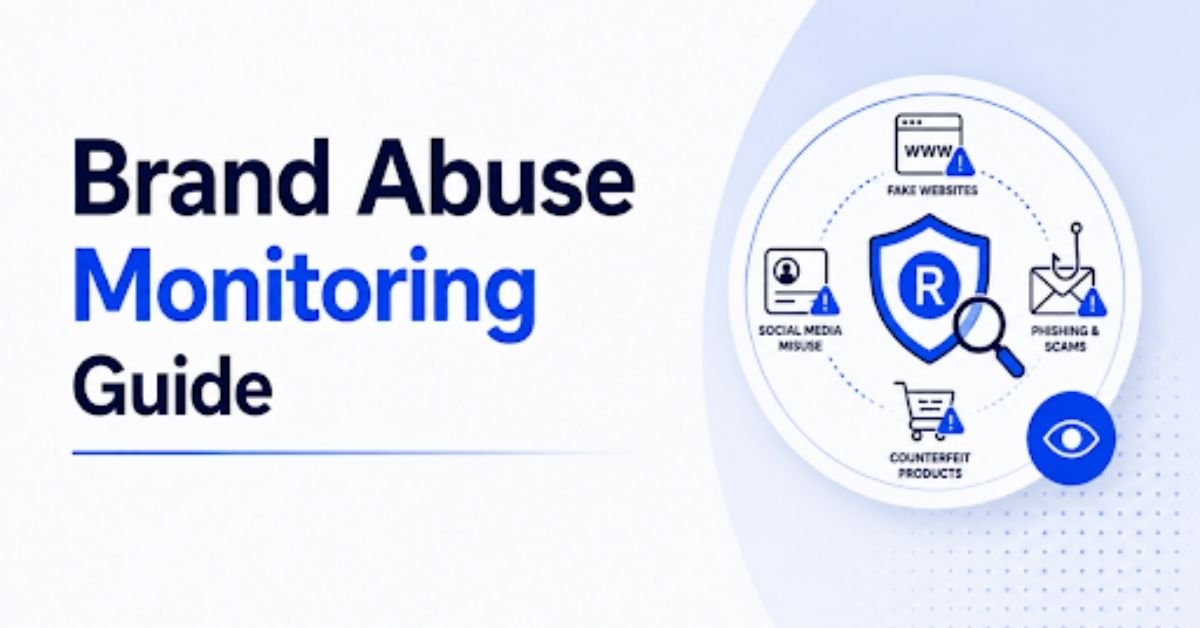
There is a quiet shift in how brands get attacked online. It is no longer loud, obvious defacement or crude impersonation. The more common pattern is subtle. A fake login page that looks almost right. A reseller listing that bends pricing just enough to erode trust. A social profile that mirrors tone and timing closely enough to confuse even careful customers.
A brand abuse monitoring guide needs to reflect that shift. Not as a checklist, but as a working view of how abuse shows up, how it spreads, and where it tends to hide when nobody is looking directly at it.
Where Brand Abuse Really Starts
It rarely begins with the brand itself. Most abuse originates in the gaps around it.
Related Stories



Domains get registered that differ by a single character. Marketplaces host listings that appear legitimate because the branding assets are correct. Paid ads redirect traffic through layers that are hard to trace in a quick review.
The problem is not visibility. It is context. A domain flagged in isolation might look harmless. The same domain tied to a phishing kit, an email campaign, and a cloned support page tells a different story. Monitoring that fails to connect those dots tends to produce noise rather than insight.
This is why any serious brand abuse monitoring guide has to move beyond surface detection.
The Forms it Takes
Brand abuse does not follow a neat taxonomy, but patterns repeat often enough to recognise them early.
Phishing remains the most persistent. Attackers invest time in replicating brand tone, not just visuals. Email templates now reflect actual customer communication styles, including support language and escalation paths.
Counterfeit sales have shifted platforms. It is no longer limited to obscure websites. Large marketplaces and social commerce channels host these listings, often cycling through seller identities to avoid long-term detection.
Social impersonation is less about direct scams and more about influence. Fake accounts build credibility slowly, then redirect users to malicious links or competing services.
There is also a quieter category. Affiliate abuse, where partners stretch attribution models beyond agreed boundaries. It does not look malicious at first glance, but it distorts revenue and damages customer experience.
A brand abuse monitoring guide should treat all of these as part of the same ecosystem, not separate problems.
Why Traditional Monitoring Falls Short
Most monitoring setups rely on keyword matching and domain scanning. That approach made sense when abuse was less coordinated. Now it creates blind spots.
A fake domain without immediate activity might be ignored, even though it is staged for a later campaign. A social account that posts benign content for weeks can pass through filters until it pivots suddenly.
There is also a timing issue. By the time an alert is triggered, the damage often has already occurred. Credentials harvested, payments redirected, trust compromised. The issue is not the lack of data. It is the lack of interpretation.
What Needs to be Watched Closely
A useful brand abuse monitoring guide focuses attention where signals tend to cluster.
Domain registrations linked to brand variations should be tracked continuously, not reviewed periodically. Patterns matter more than individual entries.
Search engine results need regular scrutiny. Abuse often surfaces there first, especially through paid placements.
Marketplaces require a different lens. It is not just about spotting counterfeit products, but identifying unusual pricing behaviour, inconsistent seller histories, and recycled product images. Social platforms demand patience. Behaviour over time reveals more than isolated posts.
Monitoring without prioritisation quickly becomes unmanageable. The goal is not to see everything, but to understand what deserves immediate action.
A Practical Monitoring Flow
This is where a structured approach helps. Not rigid, but clear enough to guide consistent action. Before listing anything, it helps to frame the process as a cycle rather than a sequence. Each stage feeds the next, and gaps appear when one stage is skipped.
- Asset Mapping
Start with a clear view of what needs protection. Domains, trademarks, product lines, executive identities. Without this, monitoring lacks direction. - Signal Collection
Pull data from domain registries, search engines, marketplaces and social platforms. The aim is breadth, not precision at this stage. - Context Analysis
This is where most systems struggle. Correlate signals. A domain linked to a marketplace listing and a social account is no longer a low-risk finding. - Risk Scoring
Not all abuse carries equal weight. Assign priority based on potential impact rather than visibility alone. - Response Action
Takedowns, legal notices, platform reports. The method depends on the channel and severity. - Feedback Loop
Learn from each incident. Patterns observed here should refine future detection.
This flow works because it mirrors how abuse evolves.
The Role of Automation
Automation has a place, but it needs restraint. Automated alerts can surface patterns that manual review would miss. Machine learning models can identify anomalies across large datasets. But without human interpretation, these systems tend to overproduce alerts.
There is also the risk of false confidence. A dashboard showing activity does not mean the right things are being monitored. A balanced brand abuse monitoring treats automation as support, not authority.
Legal And Operational Friction
Takedown processes are rarely straightforward. Each platform has its own requirements, response times and thresholds for action.
Legal routes can be effective but slow. Operational responses are faster but sometimes temporary. A removed listing can reappear under a different seller within hours. This creates a need for persistence rather than one-time action.
Monitoring should not stop at detection. It has to track the effectiveness of responses and identify repeat offenders.
Measuring What Matters
Metrics often lean towards volume. Number of domains flagged, listings removed, accounts reported. These figures can be misleading.
A smaller number of high-impact interventions often matters more than a large number of low-risk removals. Measuring time to detection and time to response tends to provide better insight into actual resilience.
The Human Factor That Gets Overlooked
Customers play a role, often unintentionally. Confusion around legitimate channels creates opportunities for abuse. If official communication is inconsistent, impersonation becomes easier. If support processes are unclear, phishing attempts appear more credible.
Internal alignment matters here. Marketing, security and customer support need to operate with a shared understanding of how the brand presents itself. Without that, monitoring becomes reactive by default.
Conclusion
Brand abuse does not announce itself clearly. It blends in, adapts, and often stays just within the margins of what looks acceptable. A strong brand abuse monitoring guide does not try to remove that uncertainty. It works within it.
What matters is consistency in observation, clarity in interpretation and persistence in response. Tools can assist, but they cannot replace judgement shaped by experience.
This is where structured support becomes valuable. CyberNX helps you identify breaches, stolen credentials, infected devices, and third-party data exposures. They offer advanced brand risk monitoring services that are tailored to your specific needs with the help of their advanced technology and experience.
The difference is not in seeing more. It is in understanding what is already visible and acting on it before it escalates.
CLICK HERE FOR MORE BLOG POSTS

Emma Clarke is a content writer at Gaukurinn.is, specializing in celebrity news, pop culture, movies, and music. With a strong focus on accuracy and trending topics, she creates engaging and well-researched articles that keep readers informed and entertained.
Emma follows trusted sources and editorial standards to ensure content is reliable, relevant, and up to date. Her goal is to deliver clear, valuable information that readers can trust.